AI for business · Nov 6, 2026 · 4 min read
What conscious AI actually means for a small business

Most conversations I have with business owners about AI start in one of two places. Either they're excited and a little overwhelmed, or they're wary and quietly worried they're falling behind.
Both make sense. AI is moving fast, and a lot of what gets sold as "AI for business" is noise: tools that promise to do everything, cost a fortune every month, and leave you further from your clients than you were before.
I build AI tools for purpose-led businesses, including my own. The way I do it is what I call conscious AI. It isn't a product or a certification. It's a way of deciding what to build, and just as importantly, what not to.
Start with the human, not the tool
Conscious AI starts with one question: does this make life better for the people using it?
That sounds obvious. Most AI projects start somewhere else, though. They start with a shiny tool and go looking for a problem. You end up with a chatbot nobody asked for, or an automation that saves you ten minutes and costs your clients the personal touch that made them choose you.
When I build something, I start with the person on the other end. For Sign-Off, the social media approval app I built for my clients, that person was a busy business owner approving posts between meetings or out on site, on their phone. Everything in the app came from their day: one link to open, no password to remember, a big Approve button where their thumb already sits.
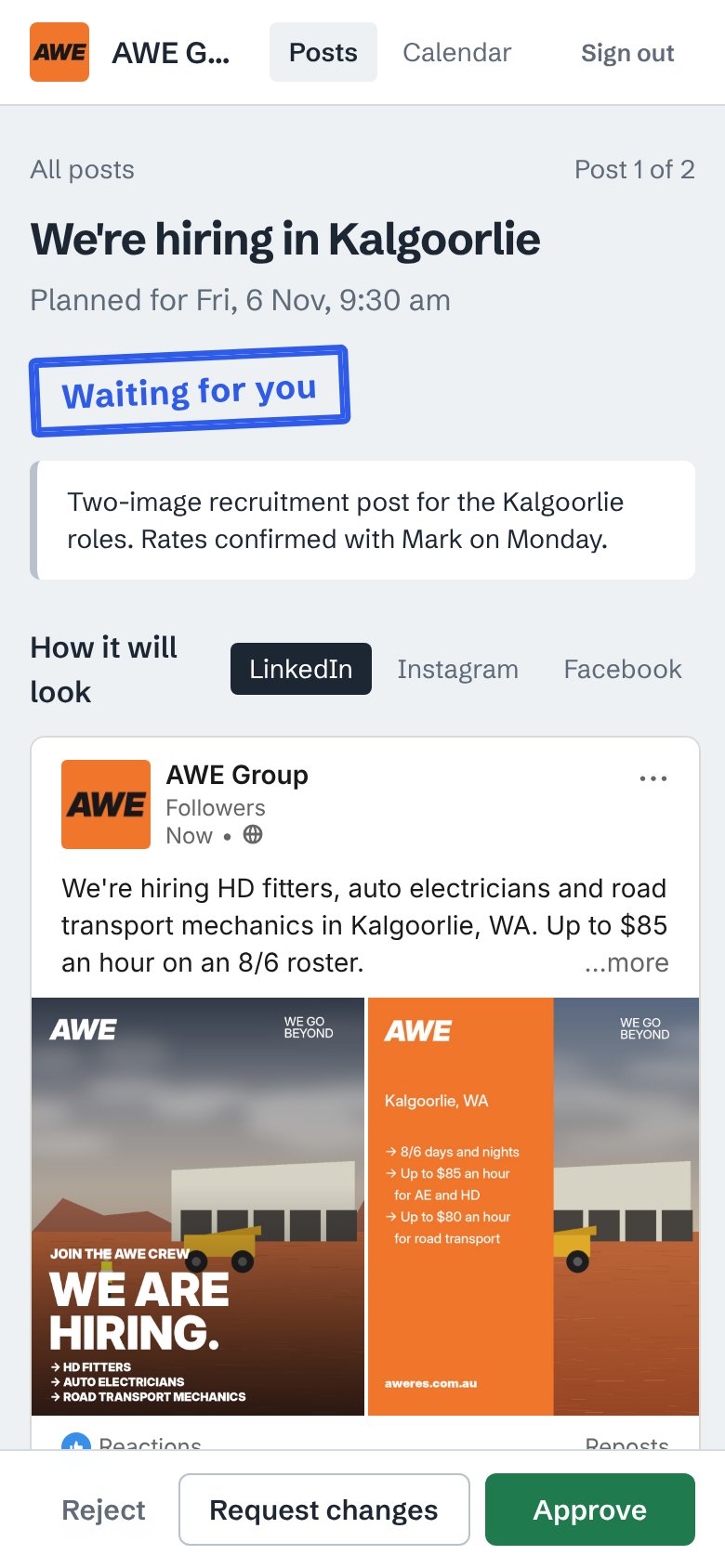
It now saves that client around style="margin-top: 48px;">00 a month in subscription fees and about two hours of back and forth every week. Not because the AI is clever, but because the tool fits how they actually work.
Four principles I build by
People first. Who will use it, and what would make their day easier? If the honest answer is "nobody, really," we don't build it.
Plain and transparent. You should always know what a tool does and why. If a client is talking to AI, they should know it.
Your data stays yours. Collect only what the tool needs, keep it somewhere you control, and know where it goes.
Made to be handed over. A good tool is one your team can understand and run. If only the person who built it can keep it alive, it's a risk, not a help.
Why this matters more for purpose-led businesses
If you run a wellness practice, a holistic brand or any business built on trust, your clients share things with you they wouldn't share with a faceless company. Their health, their worries, sometimes their whole life story.
That trust is your business. An AI tool that mishandles it, or that makes your clients feel processed rather than seen, does more damage than any time it saves.
The good news is that the same care you bring to your clients can shape the tools you use. When you build around your values, AI becomes another way of showing up well, not a shortcut that cheapens what you do.
What it looks like day to day
Conscious AI usually looks less impressive than people expect. I take that as a good sign.
It looks like an agent that logs my finished tasks into Notion at the end of the day, so I'm not doing admin at 9pm. It looks like a coaching client's messy to-do list turned into focus blocks and rest blocks, with a timer that tells them to take a break. It looks like a reader app that turns a PDF into an audiobook, because the book I wanted wasn't on any of the big apps.
None of these replace the human work. They clear space for it.
What it isn't
It isn't using AI to pretend to be you. Writing every caption, email and message with AI and passing it off as your own voice slowly wears away the trust you've built. Use AI to draft, research and organise, and keep the final word yours.
It isn't automating care. A booking reminder can be automated. The check-in after a hard session shouldn't be.
It isn't chasing every new tool. Most small businesses need two or three well-chosen tools, not twenty subscriptions.
A five-question check before you start
Australia's National AI Centre has a guide for small businesses using AI responsibly. One of its clearest points: start with a small pilot, and remember you're responsible for how AI is used in your business, even when it's an off-the-shelf product.
Before you add any AI tool, ask yourself:
What problem is this solving, and for whom?
Would my clients be comfortable knowing how this works?
What personal information does it touch, and where does that go?
If it breaks, who fixes it?
Will it give me or my team time back for the work that matters?
If you can answer all five clearly, you're probably on the right track.
Where to start
Pick one task that drains you every week and that nobody enjoys. Approvals, scheduling, reporting, onboarding new clients. Build or choose a tool for that one job, use it for a month, and notice how it feels.
If you'd like help working out what that first step could be for your business, book a free discovery call. We'll look at where your time goes and what's actually worth building. You can also see what I build and why purpose comes first.